

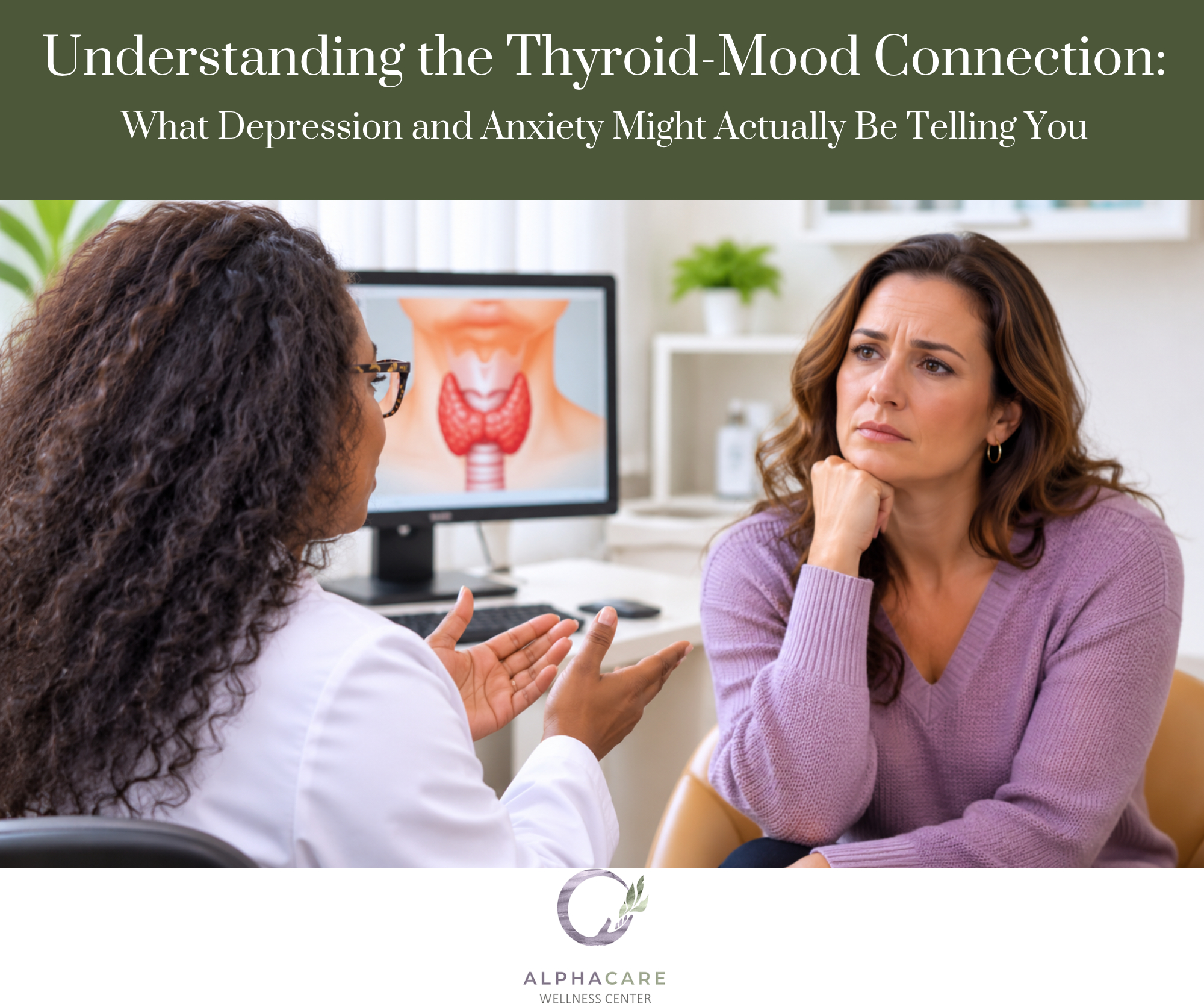
 When It’s Not Just the Holiday Blues
November can be a difficult month emotionally. The time change, shorter days, colder weather, and the emotional complexity of family gatherings all contribute to mood changes for many
people. But when anxiety, depression, or emotional flatness persist, or feel out of proportion to life circumstances, the thyroid may be playing a role that’s going unrecognized.
At Alpha Care Wellness Center, we routinely identify thyroid dysfunction as an underlying driver of mood disorders, often in patients who have already been treated for depression without
adequate improvement.
How the Thyroid Influences Mood
The thyroid gland produces hormones (T3 and T4) that regulate metabolism in every cell of the body, including brain cells. When thyroid hormone levels are suboptimal, the brain’s ability to produce and regulate neurotransmitters like serotonin, dopamine, and norepinephrine becomes impaired.
This is why thyroid dysfunction can present with symptoms that look and feel identical to a primary mood disorder:
- Hypothyroidism is commonly associated with depression, emotional numbness, fatigue, cognitive slowing, and low motivation.
- Hyperthyroidism or Hashimoto’s fluctuations can produce anxiety, irritability, panic, and mood instability.
- Subclinical hypothyroidism, where TSH is elevated but within the “normal” range, can still significantly affect mood and cognitive function.
Why Standard Thyroid Testing Often Misses the Problem
A TSH-only thyroid test, which is standard in most primary care settings, provides an incomplete picture. TSH reflects pituitary signaling, not how much active thyroid hormone is available to the brain and body.
A comprehensive thyroid panel includes:
- Free T3 – the active form of thyroid hormone that enters
- Free T4 – the precursor that must convert to
- Reverse T3 – a blocking molecule that can interfere with T3 activity under chronic
- Thyroid antibodies (TPO and TgAb) – to detect Hashimoto’s autoimmune thyroiditis, even when other markers appear normal.
Many patients with mood symptoms and “normal” TSH have significant imbalances when a full panel is reviewed.
The Adrenal-Thyroid-Mood Triangle
The thyroid does not operate in isolation. Adrenal stress, cortisol imbalance, and nutrient
deficiencies (particularly selenium, iodine, zinc, and iron) all affect thyroid hormone conversion and utilization. Addressing these systems together often produces more meaningful improvement in mood than treating thyroid alone.
Getting the Right Answers
If you or someone you love is managing depression, anxiety, or emotional instability that hasn’t responded fully to conventional treatment, a comprehensive thyroid and hormonal evaluation may reveal what has been missed.
At Alpha Care Wellness Center, we take the time to look at the full picture, including thyroid, adrenal, nutritional, and inflammatory factors that influence brain health and mood.
Call (817) 550-6332 or visit alphacarewellnesscenter.com to schedule a comprehensive evaluation today.