

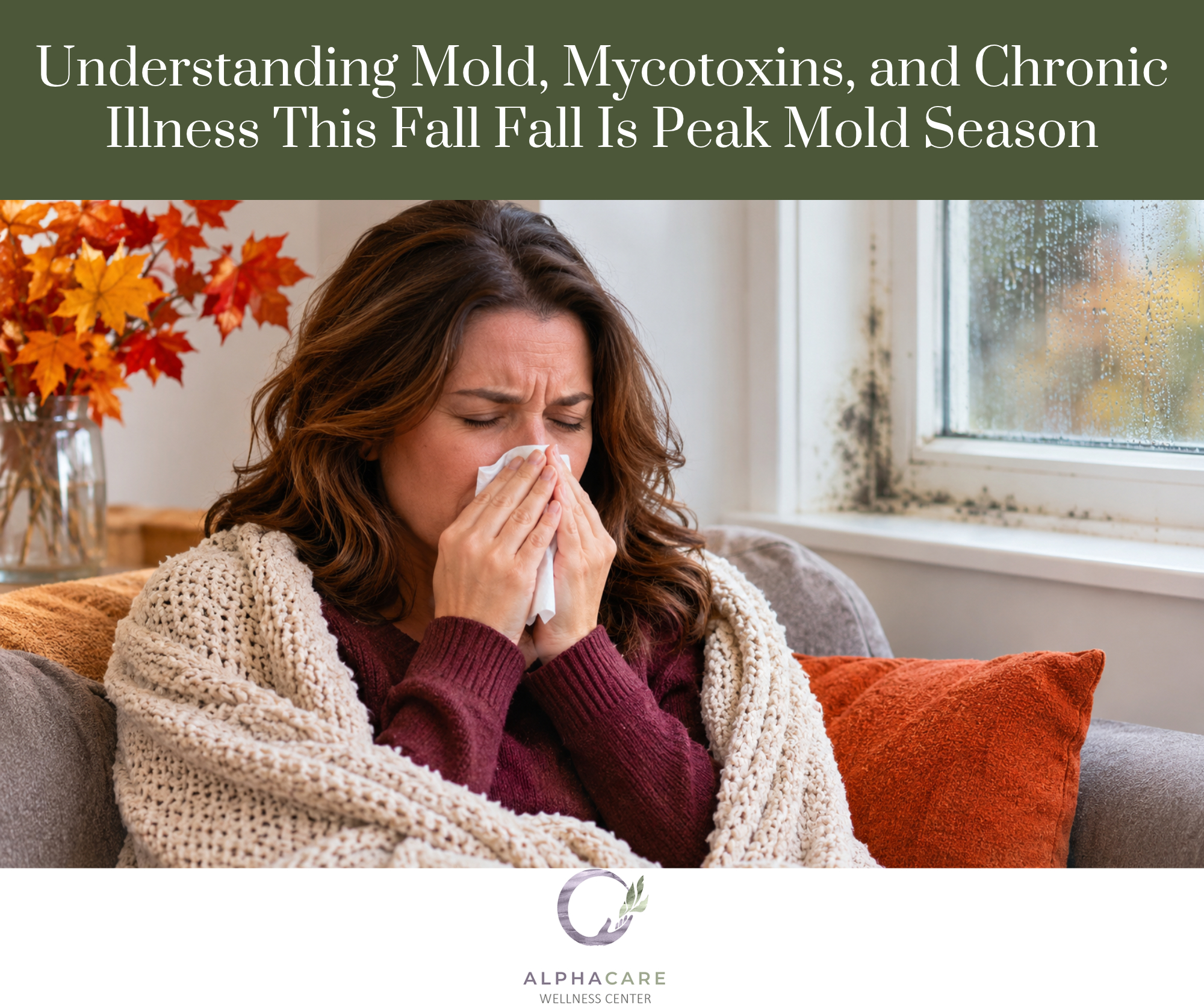
 When the leaves drop and rain returns, mold thrives in yards, crawl spaces, HVAC systems, and older homes. For most people, brief mold exposure causes mild irritation. But for individuals with mold sensitivity or compromised detoxification pathways, repeated exposure can trigger a complex, body-wide response known as Chronic Inflammatory Response Syndrome (CIRS).
At Alpha Care Wellness Center in Weatherford, TX, mold illness is one of our specialties.
October is the perfect time to learn what mold exposure actually does to the body, and how to find out if it’s affecting yours.
What Mold Does to the Body
Molds produce mycotoxins, or microscopic chemical compounds that, when inhaled or ingested, can disrupt multiple systems simultaneously. Unlike a standard allergic reaction, mold illness
often develops slowly and affects the immune, neurological, hormonal, and digestive systems at once.
- Common symptoms linked to mold and mycotoxin exposure include:
- Persistent fatigue that doesn’t improve with
- Brain fog, memory issues, or difficulty
- Recurrent sinus congestion or respiratory irritation
- Joint pain and muscle aches
- Mood changes, anxiety, or low motivation
- Digestive issues including bloating or food
- Sleep
Many patients with mold illness have seen multiple providers without resolution because standard lab panels don’t test for mycotoxin exposure or CIRS markers.
Why Mold Illness Is Often Missed
Conventional medicine typically evaluates symptoms individually. A patient with fatigue may be told they’re depressed; one with brain fog may have “normal” bloodwork. Mold illness mimics
dozens of other conditions, which is why it goes undiagnosed for years in many people.
Functional medicine takes a different view. Looking at the full picture, including environmental history, genetic susceptibility (HLA-DR gene variants affect mold clearance), and specialized lab markers.
Testing for Mold Illness at Alpha Care Wellness Center
We use comprehensive mold and mycotoxin testing to identify exposure and assess the body’s inflammatory response. Testing may include:
- Urine mycotoxin panels to detect specific mold
- HLA-DR genetic testing to assess detoxification
- Visual Contrast Sensitivity (VCS) testing – a neurological screening tool for biotoxin illness
- Inflammatory markers including TGF-beta, MMP-9, and C4a
- Comprehensive stool analysis to assess gut
A Path to Recovery
Once mold illness is identified, treatment is personalized. It typically involves removing the source of exposure, supporting the body’s detoxification pathways, restoring gut health, and reducing systemic inflammation, in a carefully sequenced approach.
If you’ve been struggling with symptoms that don’t have clear answers, mold illness may be worth exploring.
Call (817) 550-6332 or visit alphacarewellnesscenter.com to schedule a consultation and learn about our comprehensive mold testing options.